AI Tools for Small Business: Complete Guide 2025
A comprehensive guide to the best AI tools for small businesses, covering all major categories and use cases.
AI Tools for Small Business: The Complete Guide for 2025
Introduction: The AI Revolution Has Arrived for Small Businesses
Remember when artificial intelligence was the exclusive domain of tech giants with billion-dollar R&D budgets? That era is over. In 2025, AI has democratized, becoming the most powerful and accessible competitive lever for small businesses. From the neighborhood bakery optimizing its supply chain to the freelance graphic designer generating stunning visuals, AI tools are no longer a luxury—they're a necessity for survival and growth.
The landscape has shifted dramatically. The global small business AI market is projected to exceed $150 billion by 2025, not because of corporate mandates, but because tools have become affordable, intuitive, and startlingly effective. This guide isn't about futuristic speculation; it's a practical roadmap. We'll explore the specific AI tools that can transform your operations, marketing, customer service, and strategy in 2025, complete with real-world applications, pricing insights, and actionable steps you can implement today. Whether you're a solopreneur or manage a team of twenty, understanding this toolkit is the key to unlocking efficiency, creativity, and scale previously unimaginable for small operations.
The 2025 AI Toolbox: Categories Every Small Business Must Know
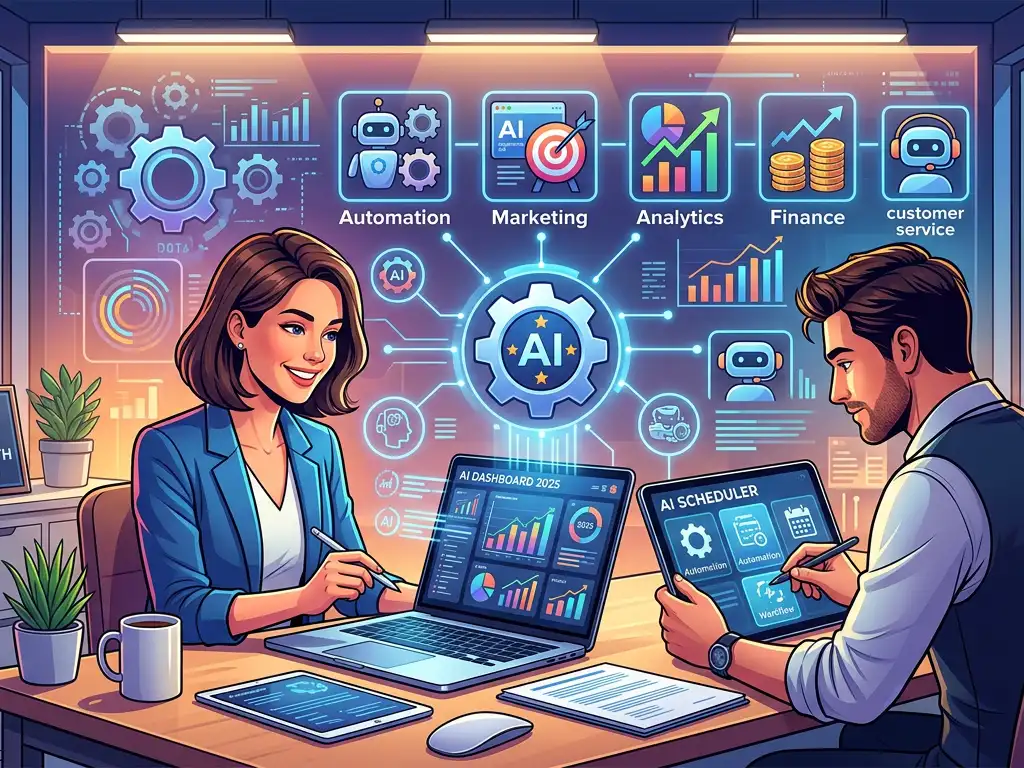
The AI ecosystem has matured, moving from isolated apps to integrated platforms. For small businesses, tools now align with core operational pillars.
1. Marketing & Content Creation AI
This category has evolved beyond simple text generators. In 2025, tools understand brand voice, audience segmentation, and multi-channel strategy.
- Key Tools & Features:
- Advanced Content Platforms (e.g., Jasper, Copy.ai 2.0, Writesonic): These now offer full content workflows—from generating SEO-optimized blog outlines and long-form articles to creating social media captions tailored for each platform's algorithm and even scripting video content.
- Visual & Video AI (e.g., DALL-E 3, Midjourney, RunwayML, Canva AI): Generate professional-grade logos, marketing images, and even short-form promotional videos from text prompts. Canva's AI, for example, can design a complete brand kit based on a simple description of your business.
- Social Media & Ad Management (e.g., Hootsuite Insights AI, AdCreative.ai): These tools not only schedule posts but also predict optimal posting times, analyze sentiment, and A/B test ad creatives and copy automatically.
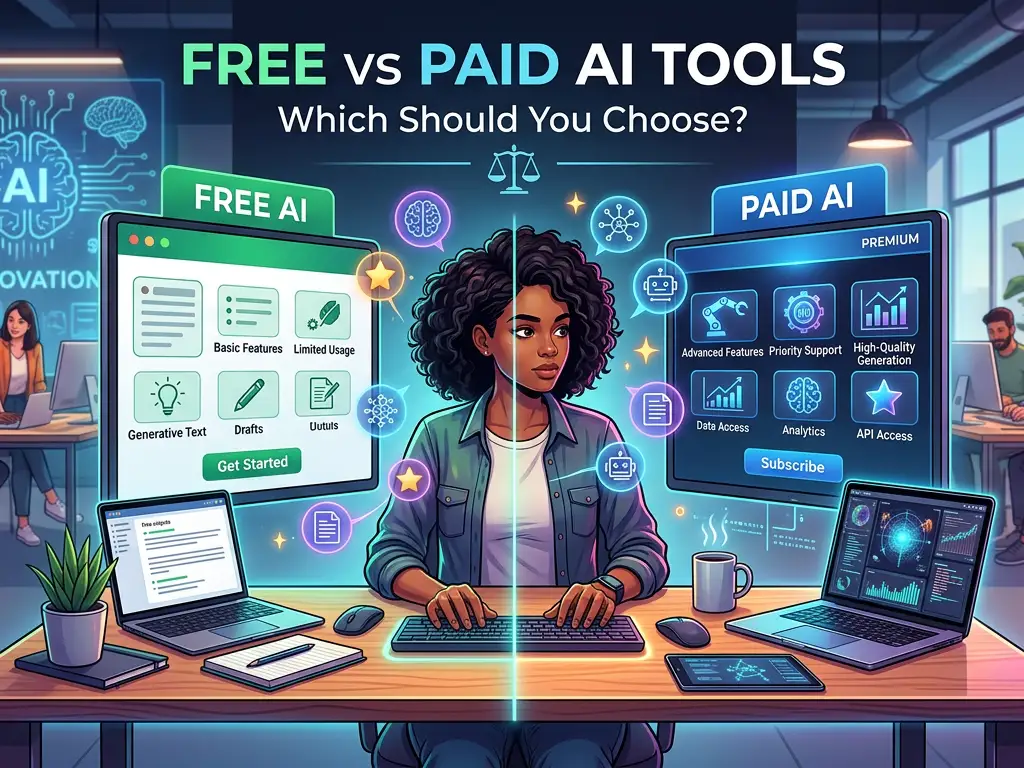
- Pricing Spectrum: Freemium models are common for basic content generation ($0-$49/month). Professional suites with advanced branding and analytics range from $99 to $500/month.
2. Operations & Productivity AI
AI acts as a force multiplier for limited teams, automating the mundane and optimizing the complex.
- Key Tools & Features:
- AI-Powered CRMs (e.g., Salesforce Einstein, HubSpot AI, Zoho Zia): These go beyond contact management. They predict lead scoring, suggest next-best actions for sales reps, and automate personalized follow-up email sequences.
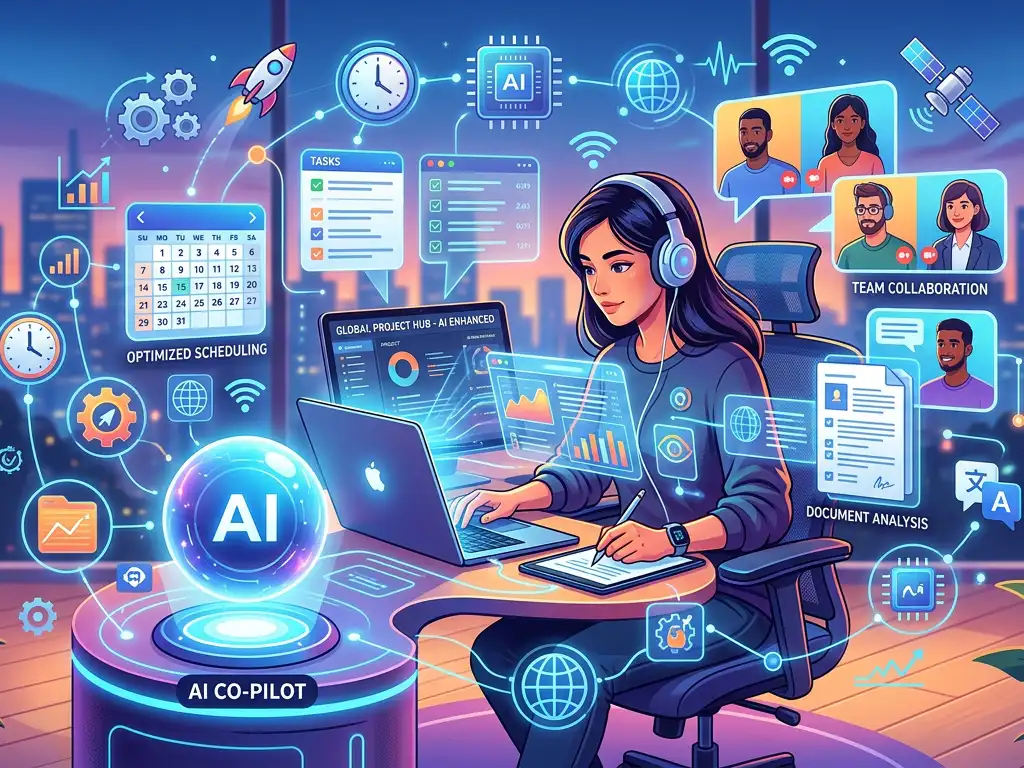
- Intelligent Assistants (e.g., Otter.ai, Fireflies.ai, Rewind AI): Attend meetings for you, transcribe discussions, summarize key decisions, and extract action items. They integrate directly with calendars and project management tools.
- Process Automation (e.g., Make, Zapier with AI Agents): Connect your apps with intelligent workflows. An AI agent can now review incoming email attachments, extract data, populate a spreadsheet, and flag anomalies without manual intervention.
- Pricing Spectrum: Basic automation starts around $20/month. Full-suite operational AI with deep integrations can range from $50 to $150/user/month.
3. Customer Experience & Support AI
Instant, 24/7 service is now table stakes. AI enables small businesses to provide a customer experience that rivals large corporations.
- Key Tools & Features:
- Next-Gen Chatbots (e.g., Intercom Fin, Zendesk Answer Bot, Drift): These chatbots are trained on your specific knowledge base (FAQs, manuals, past tickets). They can resolve up to 70% of routine inquiries, handle returns, and book appointments, escalating only complex issues to a human.
- Sentiment & Feedback Analysis (e.g., MonkeyLearn, Brandwatch): Analyze customer reviews, support tickets, and social media mentions in real-time to gauge sentiment, identify urgent issues, and spot emerging trends.
- Pricing Spectrum: Basic chatbot widgets can start under $50/month. Advanced omnichannel support suites with AI are typically $100-$300/month.
4. Data Analysis & Financial AI
Making data-driven decisions is critical. AI demystifies analytics and provides financial foresight.
- Key Tools & Features:
- Business Intelligence (BI) for SMBs (e.g., Microsoft Power BI with Copilot, Tableau GPT): Instead of complex dashboards, you can simply ask, "What were my top-selling products last quarter by region?" in plain language and get an instant visual report.
- AI Bookkeeping & Forecasting (e.g., QuickBooks Advanced AI, Pilot): Automate expense categorization, generate cash flow forecasts, and get AI-driven insights on profitability drivers and potential financial shortfalls.
- Pricing Spectrum: Simple reporting tools start around $30/month. Comprehensive financial AI platforms range from $70 to $200/month.
Real-World Use Cases: AI in Action for Small Businesses
Let's move from theory to practice. Here’s how different types of small businesses are leveraging AI in 2025.
Case Study 1: The Boutique Fitness Studio ("Elevate Fitness")
- Challenge: Limited marketing budget, high member churn, and administrative overload for the owner.
- AI Solution Stack:
- Content & Ads: Used Canva AI to create a month's worth of visually cohesive social media posts and promotional flyers in one afternoon. Used AdCreative.ai to generate high-converting ad variants for a "New Year, New You" campaign.
- Operations: Implemented an Intercom chatbot on their website to handle 24/7 inquiries about class schedules, membership tiers, and cancellations, freeing up 10+ hours per week.
- Customer Insight: Used MonkeyLearn to analyze all member feedback from Google Reviews and emailed surveys. AI identified that "childcare availability" was a hidden churn driver for parents, leading to a new service offering.
- Outcome: 30% reduction in administrative time, 25% increase in new member sign-ups from targeted ads, and a 15% decrease in churn after addressing identified pain points.
Case Study 2: The Local Plumbing & HVAC Service ("Reliable Flow")
- Challenge: Inefficient scheduling, missed follow-ups, and difficulty estimating job complexity from customer calls.
- AI Solution Stack:
- Productivity: Equipped all technicians with Otter.ai on their work phones. During customer calls, it transcribes conversations, highlights key issues (e.g., "water heater, 10 years old, leaking"), and auto-creates a service ticket with notes.
- Operations: Used Zapier's AI Agent to create a workflow. When a job is marked "complete" in their field service app, the agent automatically generates a follow-up email with a satisfaction survey and a reminder for annual maintenance, and schedules a check-in call in the CRM for 11 months later.
- Financial Planning: Used QuickBooks Advanced AI to analyze seasonal cash flow patterns, accurately predicting the need for a short-term line of credit in slow summer months.
- Outcome: 40% reduction in time spent on administrative paperwork, improved first-visit resolution rates due to better dispatcher notes, and more stable year-round cash flow.
Actionable Implementation: Your 2025 AI Adoption Roadmap
Jumping in can feel overwhelming. Follow this phased approach.
Phase 1: Audit & Identify (Weeks 1-2)
- Conduct a Time Audit: Track where you and your team spend the most repetitive, low-cognitive hours (e.g., email sorting, social media posting, data entry).
- Pinpoint Pain Points: Identify 1-2 critical bottlenecks. Is it lead generation? Customer service response times? Content creation?
- Set a Budget: Determine a realistic monthly investment. Start with one tool in one category.
Phase 2: Pilot & Integrate (Weeks 3-10)
- Start Small: Choose one tool that addresses your top pain point. For example, if content is king, start with a Canva AI or Jasper subscription.
- Run a Focused Pilot: Implement the tool for a single, defined project (e.g., "We will use AI to create all Q1 social media content").
- Integrate Deeply: Connect your new AI tool to your existing stack. Use Zapier/Make to link your AI content tool to your social scheduler, or your AI meeting assistant to your project management tool.
Phase 3: Scale & Optimize (Months 3-6+)
- Measure ROI: Analyze metrics pre- and post-implementation. Time saved, cost per lead, customer satisfaction scores.
- Train Your Team: AI is an assistant, not a replacement. Train staff on prompt engineering—how to give clear, contextual instructions to get the best output.
- Build Your Stack: Once one tool proves valuable, strategically add a second from another category (e.g., add a chatbot after mastering a content tool).
Critical Tips & Best Practices for 2025
- The Human-in-the-Loop is Non-Negotiable: Always review, edit, and add your unique human touch to AI output. AI generates drafts; you provide strategy, brand heart, and final judgment.
- Prioritize Data Privacy & Security: Vet AI tools for compliance (SOC 2, GDPR). Never input sensitive customer data (SSNs, full payment info) into a public AI chatbot. Use business-tier tools with data protection agreements.
- Become a Prompt Engineer: Your results are only as good as your prompts. Be specific, provide context, and iterate. Instead of "Write a blog," try "Write a 800-word blog for small bakery owners on using AI for inventory management, in a friendly and encouraging tone, highlighting cost savings."
- Beware of "Shiny Object Syndrome:** Don't chase every new AI tool. Focus on solving core business problems. A well-integrated stack of 3-4 tools is far more powerful than 15 unused subscriptions.
- Ethical Use is Good Business: Be transparent when customers interact with AI (e.g., "You're chatting with our AI assistant, ReliableBot!"). Use AI to augment service, not to deceive.
Conclusion & Key Takeaways
The small business landscape of 2025 is defined not by who has the biggest budget, but by who can most intelligently leverage technology. AI is the great equalizer. It allows you to compete on quality, speed, and personalization at scale.
Your Key Takeaways:
- Start Now, Start Small: The cost of inaction is rising. Begin with a single, high-impact tool.
- Focus on Integration: The true power of AI is unlocked when tools talk to each other, creating automated workflows that run your business while you sleep.
- Augment, Don't Automate Everything: Use AI to handle repetitive tasks and generate ideas, freeing your most valuable asset—your human creativity, empathy, and strategic thinking—for the work that truly matters.
- The Tool is Only as Good as the Strategy: AI requires direction. You bring the business acumen, the customer knowledge, and the vision. AI brings the executional horsepower.
The future of small business is not about being replaced by machines; it's about being empowered by them. In 2025, the most successful small businesses will be those led by entrepreneurs who have learned to partner with AI, using it as a catalyst for growth, innovation, and deeper human connection with their customers. Your journey begins with the first step: identifying that one process you can delegate to a capable digital ally today.